
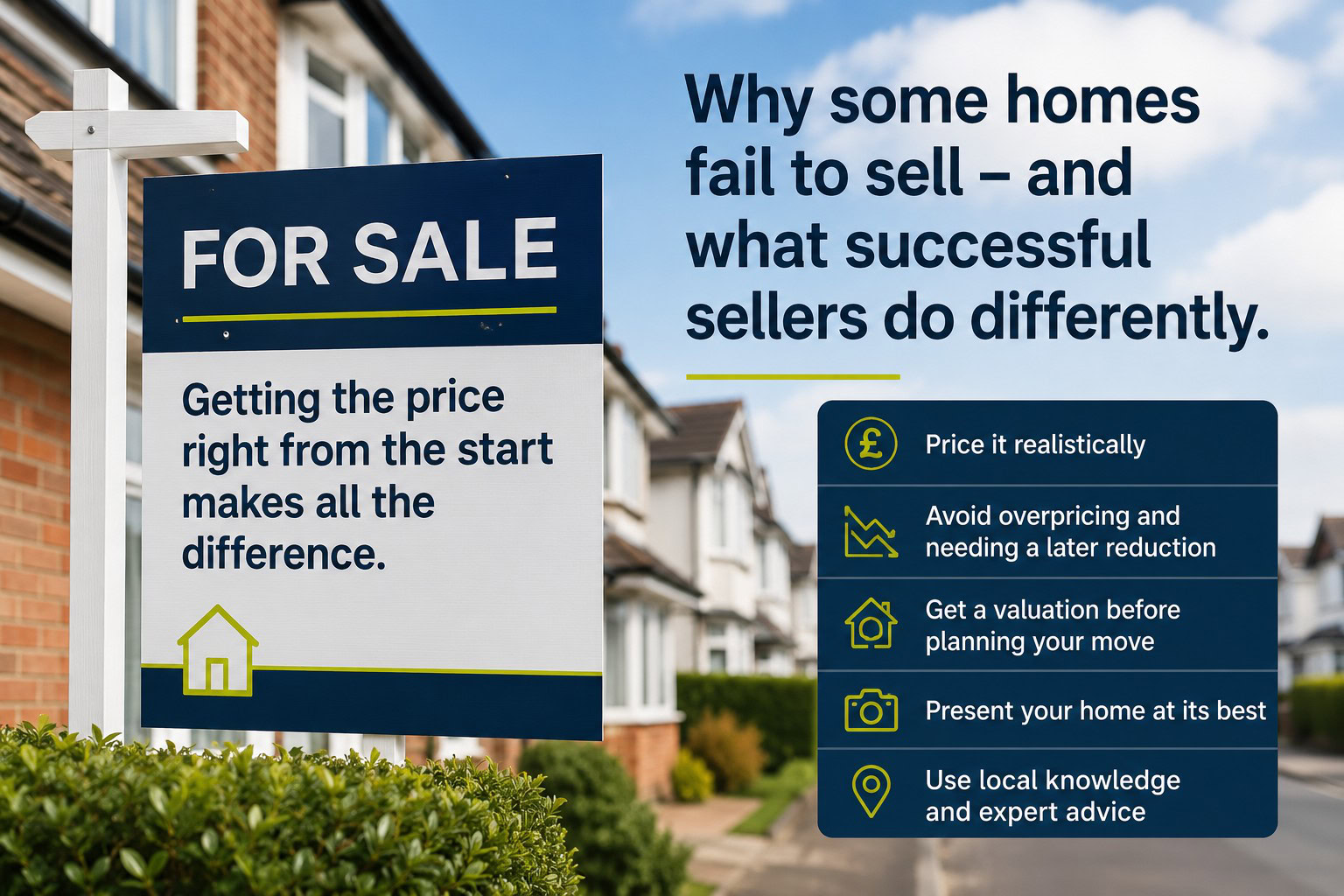
🏡 Why some homes fail to sell — and what successful sellers do differently
Putting your home on the market is a big decision, so it can be frustrating when the interest does not turn into a successful sale. According to Zoopla, 44% of UK homes listed for sale in the past three years failed to sell, with overambitious pricing one of the main reasons properties became stuck on the market.
That does not mean sellers are powerless. In fact, many of the things that help a property sell are within your control from the very beginning — including the asking price, presentation, preparation and the quality of advice you receive before launching.
For sellers in Herne Bay, Whitstable and the surrounding Kent area, the message is clear: getting the price and strategy right from day one can make a significant difference. A strong launch can create momentum, attract serious buyers and reduce the risk of needing a later price reduction.
💷 1) Be realistic about the asking price
Zoopla’s research found that unrealistic pricing is one of the biggest reasons homes fail to sell. Some sellers know from the outset that their property is priced too high, while others only realise later that the figure was not in line with the market.
It is understandable to want the best possible price, especially if you are buying another property, downsizing, upsizing or managing rising moving costs. However, buyers are well informed. They can compare similar homes online, look at previous sold prices and quickly spot when a property appears too expensive.
In Herne Bay and the surrounding coastal market, pricing needs to reflect the property itself, not just the owner’s hopes. Sea views, parking, condition, garden size, lease length, proximity to the station, access to the seafront and local competition can all affect value. A realistic price is not about underselling — it is about positioning the property properly so buyers take it seriously.
📉 2) Do not rely on a later price reduction to fix everything
Zoopla reported that, for many sellers, reducing the asking price became the only way to attract a buyer. While price reductions can work, they are rarely as powerful as getting the launch price right in the first place.
The first few weeks of marketing are often when a property receives the most attention. Buyers who have alerts set up on property portals are quick to spot new listings. If the price feels too ambitious at launch, some buyers may dismiss it and never come back, even after a later reduction.
A sensible pricing strategy from day one can help generate viewings, encourage competition and avoid the property becoming stale online. It can also reduce the stress of sitting on the market for months without meaningful progress.
🏠 3) Get your valuation before falling in love with your next home
One of the most common mistakes sellers make is looking for their next home before getting a clear idea of what their current property is likely to achieve. Zoopla found that many sellers viewed properties before getting their own home valued, and some even made offers before understanding their selling position.
This can create pressure to price your home based on what you need, rather than what the market will support. Unfortunately, buyers do not base their offers on your onward purchase. They base them on value, condition, location and available alternatives.
Before making firm plans, it is sensible to arrange a proper local valuation. This gives you a clearer idea of your budget, your likely timescale and whether your move is realistic. It also helps avoid disappointment later in the process.
🧹 4) Presentation still matters
Price is important, but it is not the only factor. Zoopla highlighted that successful sellers often paid attention to appearance before going to market. Clean, tidy and well-maintained homes tend to make a stronger impression both online and in person.
That does not mean every seller needs to spend heavily on renovations. Often, small improvements can make a noticeable difference. Decluttering, tidying the garden, touching up paintwork, fixing minor defects and making rooms feel light and welcoming can all help buyers imagine themselves living there.
In a competitive market, buyers may compare your home with several others in the same price range. Good presentation can help your property stand out and can make viewings feel more positive from the start.
📸 5) Make sure your online listing works hard
Most buyers will see your property online before they ever book a viewing. That means your photographs, floorplan, description and key details need to work together to create interest quickly.
A good listing should highlight the home’s strongest features honestly and clearly. It should also make practical information easy to understand, including tenure, parking, garden space, location benefits and any important material information that may affect a buyer’s decision.
For local sellers, lifestyle details can be very important. Buyers moving to Herne Bay, Whitstable or nearby villages may be interested in the coast, schools, transport links, independent shops, countryside access and the character of the area. The right marketing should connect the property with the reasons people want to live there.
📍 6) Understand your local market
National property headlines can be useful, but they do not always reflect what is happening street by street. The market can vary significantly between towns, postcodes and even neighbouring roads.
A bungalow close to the seafront may attract a different buyer profile from a family house near schools, a flat close to the station or a period home in a village setting. Each property needs its own strategy based on likely buyers, competing homes and current demand.
This is where local knowledge really matters. A good estate agent should be able to explain not just what your property may be worth, but why — using comparable evidence, buyer feedback and current market conditions.
🤝 7) Listen to honest advice, not just the highest valuation
It can be tempting to choose the agent who gives the highest suggested asking price. However, the highest valuation is not always the best advice. If a price is set too high simply to win the instruction, the seller may lose valuable time and momentum.
A professional agent should give clear, evidence-based guidance. That may include a recommended asking price, a possible sale range, a marketing strategy and advice on what could be improved before launch.
The right agent should also review progress once the property is live. If viewings are low, feedback is weak or similar homes are selling faster, the strategy should be discussed rather than ignored.
🏠 What successful sellers tend to do differently
Successful sellers usually prepare early, price realistically and take local advice seriously. They understand that the asking price needs to reflect the market, not just their onward plans. They also make sure the property looks its best before the photographs are taken.
They also respond to feedback. If buyers are viewing but not offering, there may be an issue with presentation, price, layout expectations or competition. If buyers are not viewing at all, the marketing strategy may need attention.
For sellers in Herne Bay, Whitstable and the wider Kent area, the most important takeaway is that selling successfully is rarely about luck alone. It is about preparation, pricing, presentation and choosing an agent who understands the local market.
A good launch gives your home the best chance of success. If you are thinking of selling, getting an honest valuation before making firm plans can help you move forward with confidence.
BOOK YOUR FREE SALES VALUATION
Source of inspiration: Zoopla’s article, “Why half of UK homes fail to sell – and what successful sellers do differently”. Read the original article here .